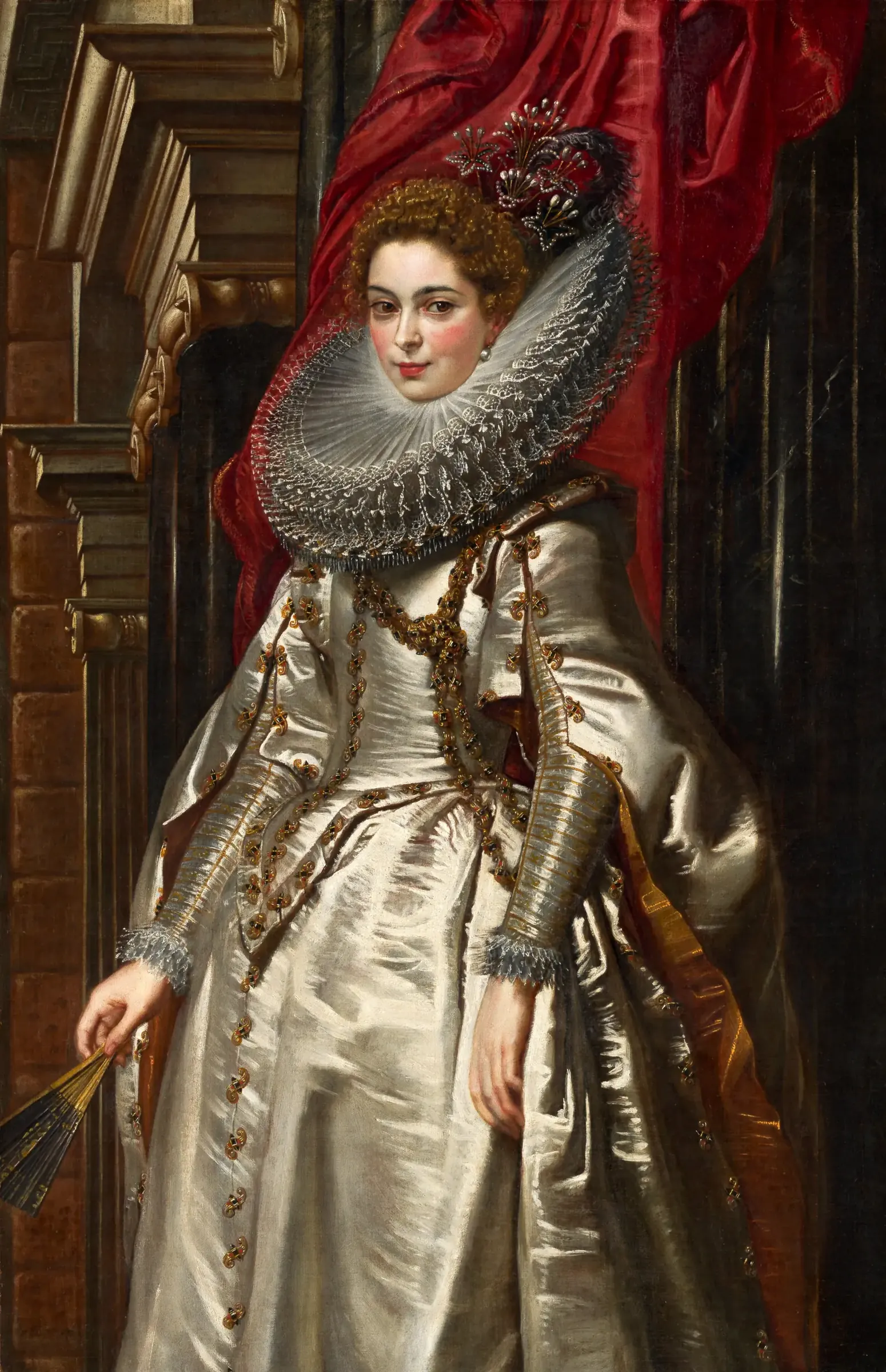
The answer to "why do I look different in pictures?" comes down mainly to three reasons: a camera that is too close distorts proportions, the mirror shows your face flipped while a photo shows it the way others see it, and a slightly tilted head changes the apparent size of each part. None of them changes your face; they change its image.
The good news is that you can control almost all of it. Below is what happens in each case and how to take a photo that shows your face as it is.
A camera up close distorts
The closer the lens is to the face, the bigger what sits in the centre, like the nose, looks compared with what sits at the edges, like the ears and the sides of the face. It is an effect of perspective, not a flaw in the camera.
A study using a mathematical model showed that photos taken up close, like an arm's-length selfie, increase the apparent size of the nose, and calculated the size of this effect at different camera distances (Ward and colleagues, 2018).
Distance also changes the impression a face makes. In several experiments, photos taken from within personal space, that is, from very close, received lower ratings for trustworthiness, competence, and attractiveness than photos of the same face taken from farther away. The effect held with image size, expression, and lighting controlled (Bryan and colleagues, 2012).
In short: a selfie distorts your face, and the distortion usually works against you.
The mirror shows you flipped
In the mirror, the right side of your face appears on the right side of the image, as if it were another person's left side. A photo undoes this flip and shows your face the way others see it.
Since no face is the same on both sides, the two versions are not the same image. In a study with three-dimensional measurements, young, healthy adults all had some degree of difference between the sides of the face (Ferrario and colleagues, 1994). A hair part, a corner of the mouth that rises higher, one eye a little higher: all of this switches sides in a photo. Since you almost always see yourself in the mirror, the photo version looks strange precisely because it is on the opposite side from what you're used to.
Some phone cameras mirror the selfie automatically to imitate the mirror. That's why the same person can look different to themselves in photos from the same phone, depending on the setting.
Pose changes proportions
Small changes in position alter what the photo shows:
- Chin up shortens the lower third and shows more of the underside of the nose.
- Chin down shortens the forehead in the image and can create a double chin that isn't there.
- Head tilted to the side makes one eye higher than the other in the photo.
- Face turned slightly makes one side wider than the other.
That's why your face looks crooked in some photos: the natural asymmetry everyone has adds up with a slightly tilted or turned head. See more in facial symmetry.
Light changes volume
Light from above casts shadows under the eyes, the nose, and the chin. Light from the side makes half of the face darker and highlights the difference between the sides. Light from the front, like a window in front of you, makes the face more even and shows the outline better.
Filters, portrait mode, and automatic beauty settings also alter the image: they slim the face, enlarge the eyes, or smooth the skin. To see your face as it is, turn them all off.
Which is your real face
Both are your face. The one in the mirror is the one you know; the one in a photo, taken from a distance, from the front, and without a filter, is the one others see. A close-up photo is the one that looks least like either of them.
How to take a photo that shows your face as it is
- Move the camera back. Ask someone else to hold the phone about 2 metres away, or prop the phone up and use the timer.
- Use the back camera, at eye level.
- Face a window or another strong light, with no shadow on your face.
- Head straight, looking directly at the lens, with your chin neither up nor down.
- No filter, no beauty mode, and no portrait mode.
- Take off your glasses and cap and pull back any hair that falls over your forehead, if you want to see the whole outline.
This same photo works for measuring your face shape. The step-by-step guide is in how to find your face shape.
How Garbo handles this
For the full analysis, Garbo asks for 7 photos: front, front smiling, right and left 3/4 profile, right and left profile, and the top of the head. The guide asks for someone else holding the phone about 2 metres away, with the back camera at eye level, light from the front, and no filter. An arm's-length selfie is accepted, with the warning that it distorts the nose and the proportions of the face.
In the measurements, Garbo accounts for head tilt before comparing the two sides of the face, so that the pose isn't read as asymmetry. To understand what is measured in each photo, see facial analysis from a photo.
Frequently asked questions
Why do I look different in pictures?
Because a close camera distorts proportions, a photo shows your face without the mirror's flip, and small changes in pose and light change what appears.
Do selfies distort your face?
Yes. A camera close to the face increases the apparent size of the nose and the centre of the face. Close-up photos are also rated as less attractive than photos taken from farther away.
Why does my face look crooked in photos?
Because every face has some difference between its sides, and a slightly tilted or turned head increases that difference in the image.
Which is my real face, the photo or the mirror?
Both. The mirror shows the flipped version you know; a photo taken from a distance shows the version others see.
How do I take a photo that shows my face as it is?
With the camera about 2 metres away, at eye level, light from the front, your head straight, and no filter.
Want to see the measurements of your face? Take the free analysis: you answer a few questions, take a photo from the front, and see the real measurements of your face.
Sources
- Ward B, Ward M, Fried O, Paskhover B (2018). Nasal Distortion in Short-Distance Photographs: The Selfie Effect. JAMA Facial Plastic Surgery.
- Bryan R, Perona P, Adolphs R (2012). Perspective distortion from interpersonal distance is an implicit visual cue for social judgments of faces. PLoS One.
- Ferrario VF, Sforza C, Poggio CE, Tartaglia G (1994). Distance from symmetry: a three-dimensional evaluation of facial asymmetry. Journal of Oral and Maxillofacial Surgery.

Now see what suits your face
Take the quiz and send a front-facing photo: the free analysis measures your face, shows its shape, and suggests haircuts and colours.
Start the free analysis