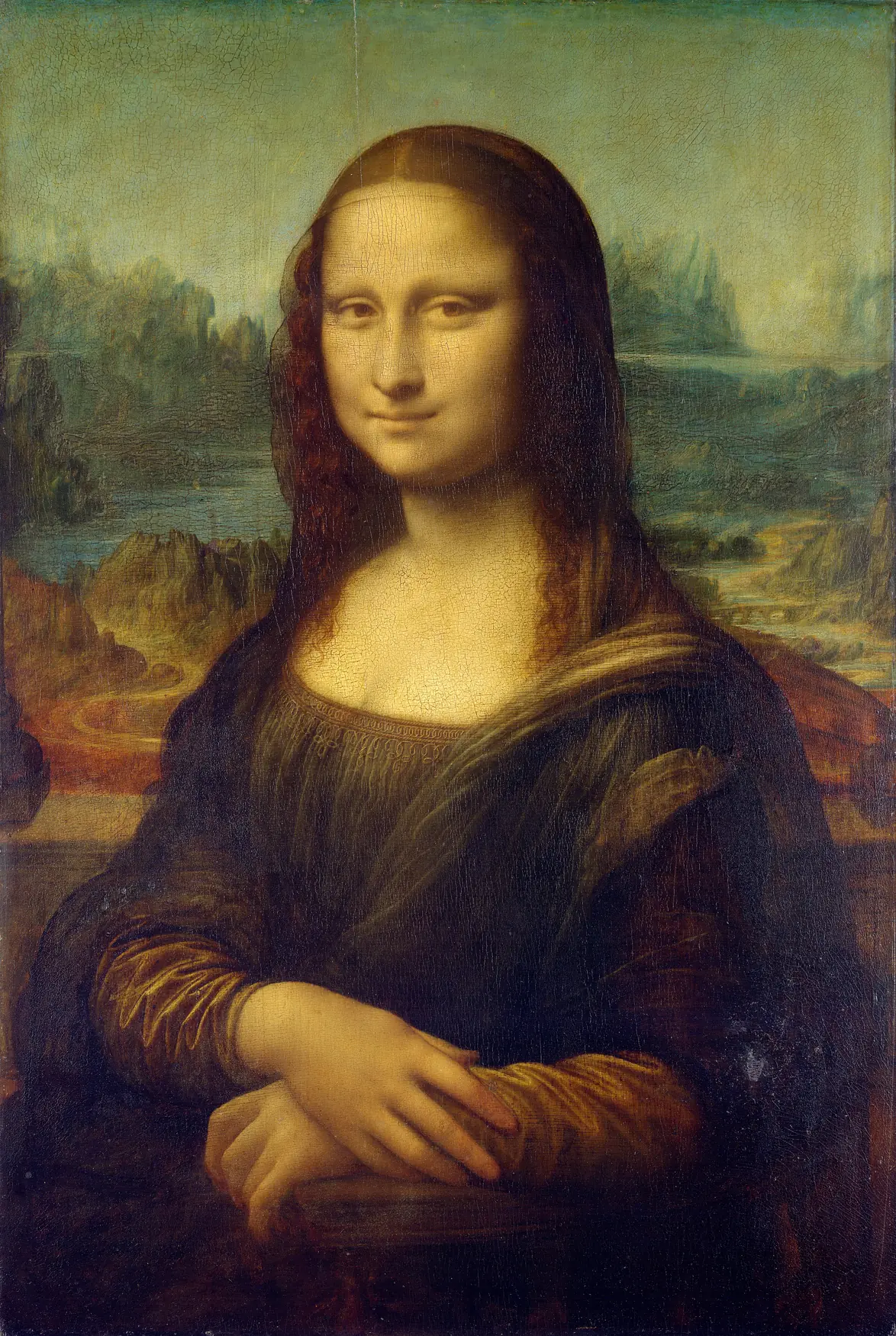
To find your face shape, take four measurements: the width of the forehead, the width across the cheekbones, the width of the jaw, and the length, from the hairline to the tip of the chin. The widest part and the relationship between length and width show which of the seven shapes is yours: oval, round, square, oblong, triangular, diamond, or heart-shaped.
The rest of this guide shows how to find your face shape step by step: how to take each measurement without mistakes, how to read the numbers, and what to do when your face seems to sit between two shapes.
What you need
- A sewing tape measure. If you don't have one, a piece of string and a ruler will do: mark the string with a pen and measure it afterward.
- A mirror with good light in front of you, or someone to help.
- All your hair pulled back and your face clear: no glasses, no cap, no hair on the forehead.
- Paper to write down the four measurements.
Keep your face relaxed, without smiling and without lifting your chin. A raised chin shortens the face in the measurement; a lowered chin lengthens it.
The four measurements, one by one
These are the same kind of measurements that facial anthropometry uses to describe the face, such as widths and heights between fixed points on the face (Farkas and colleagues, 1985 and 2005). At home, the precision is lower, but comparing them with each other already works.
1. Forehead. Measure from one temple to the other, across the widest part of the forehead, near the hairline. If your hairline is receding, use the point where the skin of the forehead ends on each side.
2. Cheekbones. Use your fingers to find the most prominent point of the bone on each side, just below the outer corner of the eyes. Measure from one point to the other, running the tape over the nose without pressing.
3. Jaw. Find the corner of the jaw on each side, just below the ear, where the bone curves. Measure from one corner to the other, running the tape under the chin, or measure from one corner to the tip of the chin and multiply by two.
4. Length. Measure from the middle of the hairline to the tip of the chin, in a straight line. If you have little hair at the front, use the height where the forehead starts to curve back.
How to read the measurements
First compare the length with the width across the cheekbones. Then see which of the three widths is the largest and what the outline of the jaw is like: with defined corners or curved.
| Shape | Length and width | Widest part | Outline |
|---|---|---|---|
| Oval | longer than it is wide | the cheekbones | curved, rounded chin |
| Round | similar | the cheekbones, with forehead and jaw close to that | curved, no defined corners |
| Square | similar | forehead, cheekbones, and jaw almost equal | straight jaw, defined corners |
| Oblong | much longer than it is wide | widths similar to each other | sides almost straight |
| Triangular | varies | the jaw, wider than the forehead | wide base |
| Diamond | a little longer than it is wide | the cheekbones, with narrow forehead and chin | narrows at the top and bottom |
| Heart-shaped | varies | the forehead | tapers to a narrow chin, in a V |
Two examples of reading them. If the length came out much greater than the width across the cheekbones and the three widths came out similar, the face leans oblong. If length and width came out similar, the difference between round and square is in the corners of the jaw: curved on a round face, defined on a square one.
When your face seems to sit between two shapes
This is the most common case, and it doesn't mean you measured wrong. The shapes are a practical way to group faces to choose a haircut, beard, and glasses. Real faces vary much more than seven categories.
Studies of facial measurements have shown this for decades. Farkas and colleagues (1985) tested the classic proportions that artists used as an ideal on 153 young adults and concluded that they don't represent average proportions: the size of each part of the face varies a lot among people with faces considered normal. In an international study of 1,470 adults aged 18 to 30, the same group found differences in measurements between populations of various backgrounds, mainly in the eye region and the nose (Farkas and colleagues, 2005).
That's why, when two rows of the table seem to fit, choose the one that best describes the widest part of your face. That's what weighs most in choosing a haircut.
The names change from place to place
You'll find other names for the same shapes:
- Oblong also shows up as rectangular, elongated, or long.
- Diamond also shows up as a rhombus.
- Heart-shaped also shows up as an inverted triangle.
On this site we always use oval, round, square, oblong, triangular, diamond, and heart-shaped.
Can you find your face shape from a photo
Yes, with two precautions. The first is distance. A selfie taken at arm's length puts the camera so close that it distorts the face: Ward and colleagues (2018) described with a mathematical model how close-up photos increase the apparent size of the nose, and the effect grows as the camera gets closer. It's better to have someone else take the photo from a little farther away, at the height of your eyes.
The second is the pose. A face that is turned or tilted changes the widths in the photo. Look straight at the camera, with your face straight and your hair pulled back.
Garbo does this reading from a photo. It compares five relationships of the face: the length against the width across the cheekbones, the forehead against the cheekbones, the jaw against the cheekbones, the angle of the corner of the jaw, and the angle of the chin. With them, it calculates how much the face resembles each of the seven shapes. When the top two come out very close, it tells you the face sits between the two and goes with the first.
What knowing your shape is for
The shape is the starting point for choosing what goes near the face:
- men's haircuts and women's haircuts;
- the beard;
- the eyebrows;
- the glasses frames.
To learn about each shape in more detail, see the 7 face shapes.
Frequently asked questions
How can I find my face shape at home?
With your hair pulled back and your face relaxed, use a tape measure to measure the forehead, the cheekbones, the jaw, and the length. Compare the length with the width across the cheekbones and see which width is the largest.
What measurements do I need to find my face shape?
Four: the width of the forehead, the width across the cheekbones, the width of the jaw from one corner to the other, and the length, from the hairline to the tip of the chin.
What is the difference between the face shapes?
What changes is the relationship between length and width, the widest part of the face, and the outline of the jaw. The table above sums up all seven.
What if my face looks like two shapes?
That's normal. The shapes are practical categories, and faces vary more than they do. Choose the shape that best describes the widest part of your face.
Can I find my face shape from a photo?
Yes, if the photo is taken from the front, with your face straight and from a little farther away. A selfie too close to the camera distorts the proportions.
Want to see your face shape measured from a photo? Take the free analysis: you answer a few questions, take a front photo, and see the measurements of your face.
Sources
- Farkas LG, Hreczko TA, Kolar JC, Munro IR (1985). Vertical and horizontal proportions of the face in young adult North American Caucasians: revision of neoclassical canons. Plastic and Reconstructive Surgery.
- Farkas LG, Katic MJ, Forrest CR e outros (2005). International anthropometric study of facial morphology in various ethnic groups/races. The Journal of Craniofacial Surgery.
- Ward B, Ward M, Fried O, Paskhover B (2018). Nasal Distortion in Short-Distance Photographs: The Selfie Effect. JAMA Facial Plastic Surgery.

Now see what suits your face
Take the quiz and send a front-facing photo: the free analysis measures your face, shows its shape, and suggests haircuts and colours.
Start the free analysis