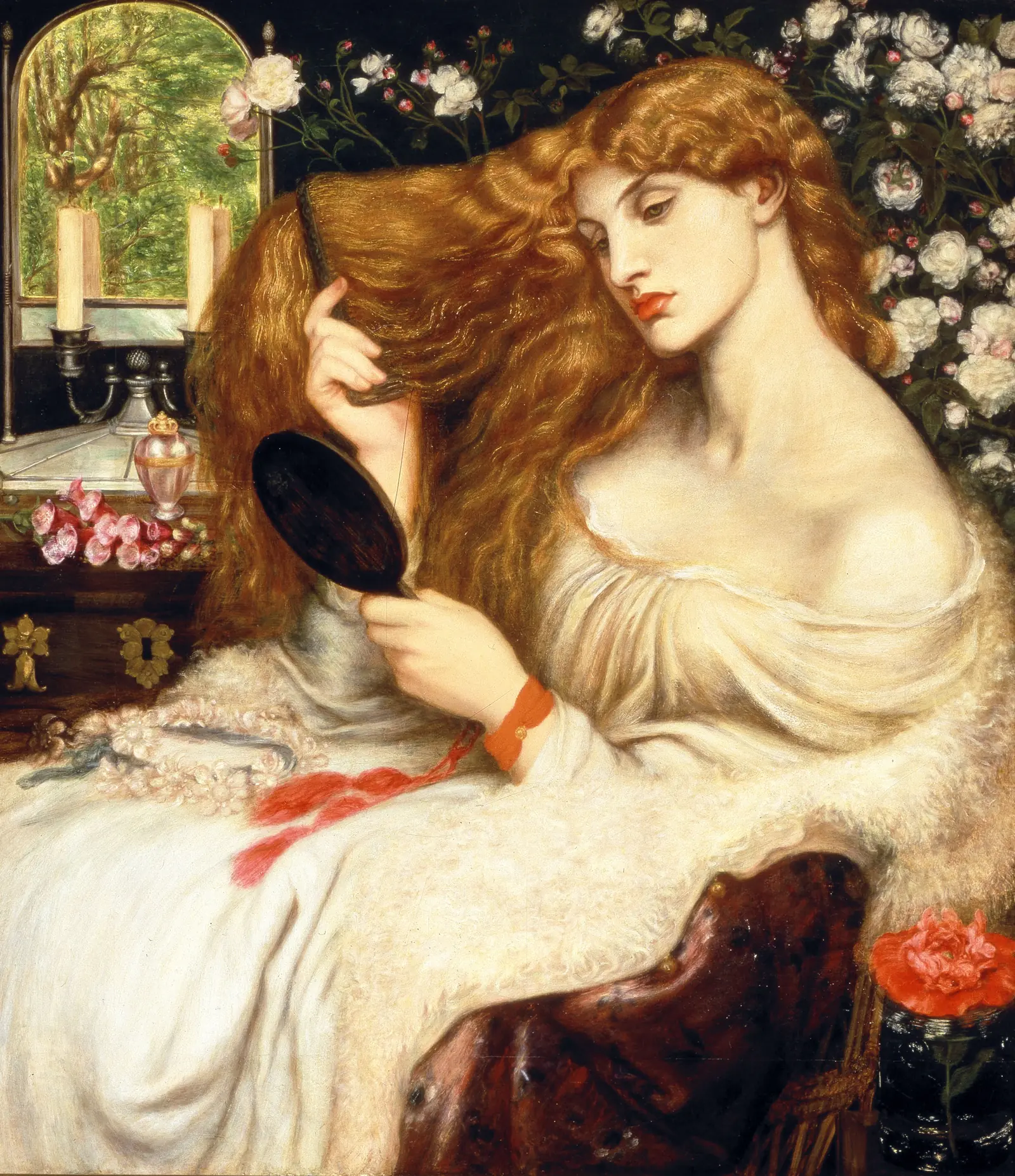
For skin with a cool undertone, the hair colours that usually suit it are the ones with cool tones: ash brown, blue-black, beige or platinum blonde. For skin with a warm undertone, the ones with warm tones: chocolate or caramel brown, honey, golden blonde, and copper red.
The undertone is half of finding the best hair colour for your skin tone. The other half is the contrast between the hair, the skin, and the eyebrows: a colour on the right side of the undertone can still look off if it goes too light or too dark compared with the rest of the face. Below is how to bring the two together before you buy the dye.
First, the undertone
The undertone is the underlying colour of the skin: cool (pink or bluish), warm (golden or peach), neutral (between the two), or olive (greenish). If you don't know yours yet, the article on skin undertone shows how to test it at home, and why the vein test is a weak clue.
The style rule is simple: the tone of the dye follows the undertone of the skin. Golden, copper, and honey tones go with a warm undertone. Ash, beige, and bluish tones go with a cool undertone. It's the same logic as personal colour analysis, applied to hair.
Hair colours for each undertone
Cool undertone
- Dark or medium brown with an ash tone.
- Black with a bluish tone, for people who already have dark hair and eyebrows.
- Beige, ash, or platinum blonde, for people with light skin.
- Red leaning towards burgundy or mahogany, instead of orange red.
Warm undertone
- Chocolate, caramel, or honey brown.
- Golden or honey blonde.
- Copper red and copper.
- Golden highlights on brown.
Neutral undertone Colours from both sides usually work. What decides is the contrast, explained below.
Olive undertone Medium and dark browns, chocolate, and subtle tones usually work. Very yellow blondes and very orange reds can bring out the greenish undertone of the skin.
These lists are style conventions, used by hairdressers and consultants. They don't come from scientific studies, and every case has exceptions.
Contrast matters as much as undertone
Contrast is the difference in lightness and darkness between the hair, the eyebrows, the eyes, and the skin. It matters because it's one of the things the eye uses to read a face.
Richard Russell's studies measure exactly this contrast. In controlled photos, female faces had more light and dark contrast between the eyes, the mouth, and the surrounding skin than male faces, and increasing that contrast made an androgynous face look female (Russell, 2009). In a larger group of faces, the eyebrow region had less contrast in women than in men, and the eye region had more (Jones, Russell, and Ward, 2015). In adult women, parts of this contrast decreased with age, and faces with artificially increased contrast looked younger (Porcheron, Mauger, and Russell, 2013).
These studies measured the features of the face, not hair colour. The link to hair dye is a practical application: changing your hair colour a lot changes the frame of the face and the contrast with the eyebrows.
In practice:
- Dark eyebrows and very light hair create a strong contrast that pulls attention to the top of the head. People who want to go much lighter usually need to adjust their eyebrows too.
- Dark hair and light skin already have high contrast. Staying close to your natural colour keeps that contrast.
- Hair, skin, and eyebrows in similar tones make a low contrast. A very dark or very light colour can make the face look harsh.
Who looks good with blonde hair
Blonde suits people who choose the right tone for their undertone and don't create too much contrast with their eyebrows. Cool skin tends to look better with beige, ash, or platinum blonde; warm skin, with golden or honey blonde. People with very dark hair and eyebrows who want a light blonde usually need bleaching, which calls for frequent touch-ups because the dark roots show quickly.
Who looks good with red hair
Red comes in warm and cool versions. Copper and orange are warm and go with a warm undertone. People with a cool undertone usually do better with reds leaning towards burgundy or mahogany. On skin with a lot of redness, an intense red can bring out that redness.
How to pick a hair dye without getting it wrong
- Find your undertone in daylight, comparing gold with silver near your face.
- Look at your eyebrows. They're the reference for contrast. The further the new colour moves from theirs, the more the contrast of the face changes, so small changes are the safest.
- Start with a tone, not a big change. A toner or fine highlights show whether the shade suits you before you change the base.
- Think about upkeep. The further from your natural colour, the sooner the roots show.
- Do the allergy patch test described on the box before any dye, or ask your hairdresser. If your scalp is irritated or has sores, don't dye it and talk to a dermatologist.
How Garbo chooses hair colour
In the Basic Analysis (US$ 67), the hair colour section shows 2 colours that may suit your skin and eyes and 1 that you're better off avoiding. Each suggestion comes with the shade, the technique, the upkeep, and the effect, and with the reason for the choice.
The Style Guide, an add-on of US$ 37 on the checkout page, shows the undertone, contrast, intensity, and value that Garbo read from your photos, with your clothing palette and your metal.
Frequently asked questions
What hair colour suits cool skin tones?
Colours with cool tones: ash brown, blue-black, beige, ash, or platinum blonde, and reds leaning towards burgundy.
What hair colour suits warm skin tones?
Colours with warm tones: chocolate or caramel brown, honey, golden blonde, and copper red.
Who looks good with blonde hair?
People who choose the tone that matches their undertone (beige or ash for cool skin, golden for warm) and don't create too much contrast with their eyebrows.
Does red hair work with a cool undertone?
Reds leaning towards burgundy or mahogany usually suit a cool undertone better than orange red.
How do I pick a hair dye without getting it wrong?
Find your undertone, stay close to the colour of your eyebrows, start with a tone, and do the allergy test first.
Want to see the measurements of your face before deciding? Take the free analysis: you answer a few questions, take a front photo, and see the measurements of your face.
Sources
- Russell R (2009). A sex difference in facial contrast and its exaggeration by cosmetics. Perception.
- Jones AL, Russell R, Ward R (2015). Cosmetics alter biologically-based factors of beauty: evidence from facial contrast. Evolutionary Psychology.
- Porcheron A, Mauger E, Russell R (2013). Aspects of facial contrast decrease with age and are cues for age perception. PLoS One.

Now see what suits your face
Take the quiz and send a front-facing photo: the free analysis measures your face, shows its shape, and suggests haircuts and colours.
Start the free analysis