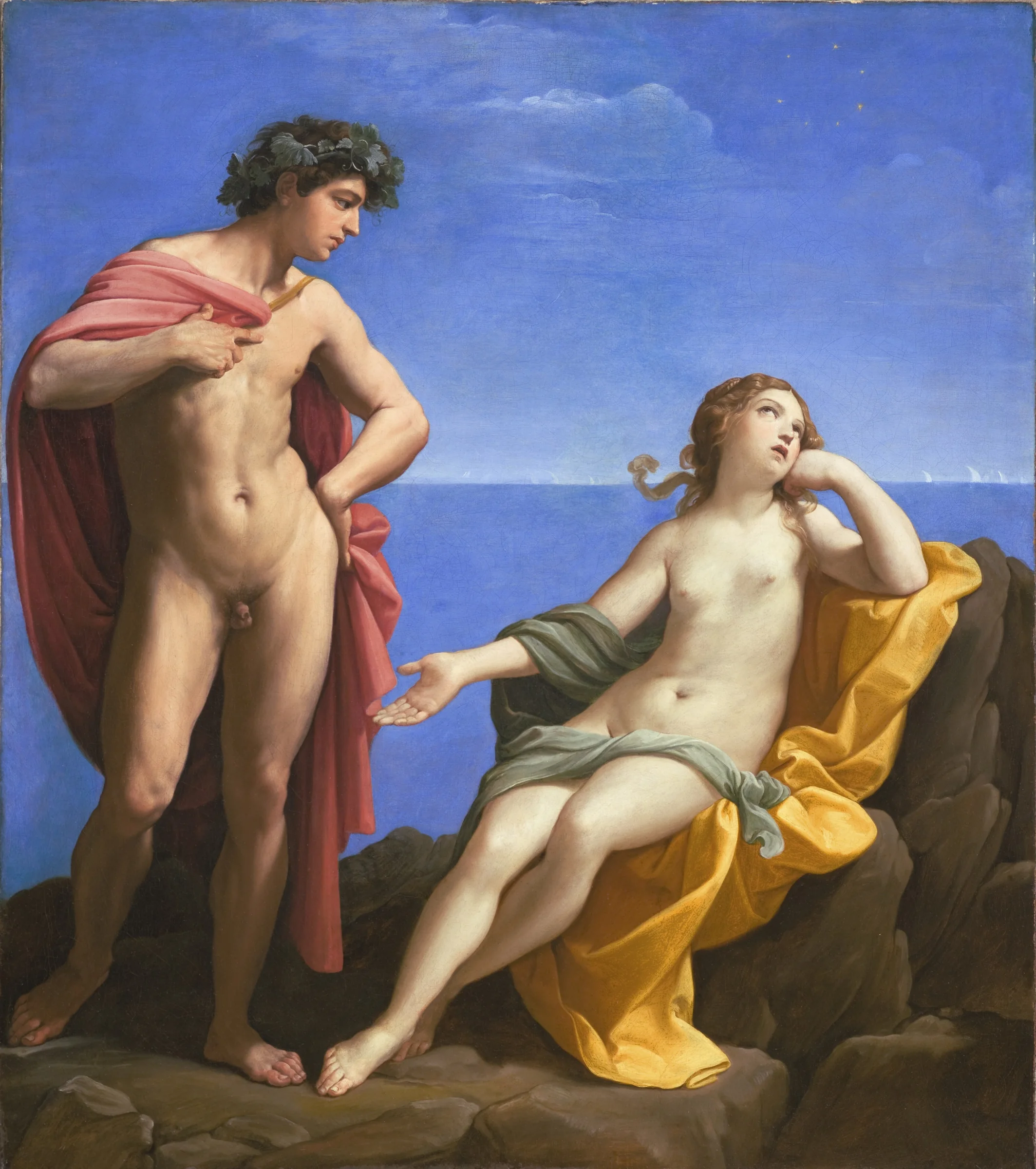
Facial dimorphism is the set of differences in shape between the typical male face and the typical female face, such as the width of the jaw, the width of the cheekbones, and the height of the lower part of the face. Measuring someone's dimorphism means seeing, feature by feature, whether each measurement is closer to the male average or the female average.
It's a description, not a beauty score. Each person has features that lean one way and features that lean the other, and studies show that the relationship between dimorphism and attractiveness is less simple than it seems.
Where the differences come from
Before puberty, the faces of boys and girls are similar. The differences appear with growth in adolescence. A study using skull measurements showed that, at puberty, the height of the upper part of the face, between the lip and the eyebrow, grows differently in men and women, and that this difference can't be explained by body size alone (Weston and colleagues, 2007).
The differences between the sexes are averages: many people of each sex are far from them, and the averages themselves change from one population to another.
Which features go into the measurement
To measure dimorphism, you choose features that differ, on average, between men and women in the same group. Some examples:
- The width of the jaw, from one corner to the other.
- The width of the cheekbones.
- The height of the lower third, from the base of the nose to the tip of the chin.
- The width of the nose, at the base.
- The width of the mouth, from one corner to the other.
- The width between the outer corners of the eyes.
For each one, the person's measurement is placed on a scale that runs from the female average to the male average of the same group. The overall average of the positions shows whether the face, as a whole, leans towards the typical male, the typical female, or sits in the middle.
The width-to-height ratio
One well-known measurement is the ratio between the width of the face and the height of its upper part, known as fWHR. It's often cited in writing about masculinity, but the data don't support it being a clear difference between the sexes.
A meta-analysis brought together studies of skulls and faces. In skulls, men had a slightly higher ratio, with a small effect. Broken down by background, the difference only appeared in East Asian samples, also small, and in the faces of white people there was no difference. The conclusion was that there's no reason to treat this ratio as a measure of dimorphism, at least not universally (Kramer, 2017).
Dimorphism and attractiveness
In women's faces, feminine features tend to be found attractive. A review of meta-analyses placed dimorphism among the three characteristics linked to attractiveness, along with symmetry and closeness to the average (Rhodes, 2006). In an experiment with participants from the United Kingdom and Japan, people preferred feminised versions of female faces to average versions, with a stronger preference for faces from their own population (Perrett and colleagues, 1998).
In men's faces, the result is mixed. In the same experiment, people preferred slightly feminised versions of male faces to average and masculinised ones. Making the face more masculine increased the impression of dominance, but also negative attributions, such as coldness and dishonesty (Perrett and colleagues, 1998). Other studies find different preferences, and a review points out that they vary with hormones, the appearance of the person looking, visual experience, and social learning (Little and colleagues, 2011).
A masculine face doesn't translate into a measured advantage. A meta-analysis of 96 studies and more than 177,000 people tested whether masculine features are related to the number of partners or children. Facial masculinity had no significant relationship with either (Lidborg and colleagues, 2022).
Adding it all up: dimorphism describes the face, but there's no point on the scale that's best for everyone.
What changes how dimorphism is read
Bones don't change with exercise or habits, but what surrounds them changes the impression:
- The beard increases or disguises the width and length of the lower part of the face. See beard styles for face shape.
- The eyebrows, straighter and lower or more arched and higher, change how the eyes are read. See eyebrow shape for face shape.
- The haircut changes the outline and how much of the jaw shows.
The idea isn't to push the face to an extreme, but to know what each feature communicates and choose with that in mind.
How Garbo measures dimorphism
The Complete Transformation includes a dimorphism assessment among the 5 facial assessments. Garbo measures six features in the front photo: the width of the eyes from corner to corner, the width of the nose, the width of the mouth, the height of the lower third, the width of the jaw, and the width of the cheekbones. Each measurement goes on a scale between the female average and the male average, using data published by sex for the group closest to yours. For the eyes and the mouth the scale is wider, from a woman with a smaller than average feature to a man with a larger than average one, because in a photo the two sexes barely differ on these features.
The assessment shows the position of each feature and the average of four of them (nose, lower third, jaw, and cheekbones), on a scale that runs from neutral to typical of your sex. It's a description: it says which way each feature leans, not whether your face is right or wrong.
To see how dimorphism adds up with the other characteristics, see what makes a face attractive, according to studies.
Frequently asked questions
What is facial dimorphism?
It's the set of differences in shape between the typical male face and the typical female face, which appear at puberty, such as the width of the jaw and the cheekbones.
Which features show dimorphism in the face?
Among those that differ on average are the width of the jaw, the cheekbones, the nose, the mouth, and the eyes from corner to corner, plus the height of the lower third.
Is a more masculine face more attractive?
Not necessarily. In experiments, slightly feminised versions of male faces were preferred to masculinised ones, and preferences vary from person to person.
Is the face width-to-height ratio different in men and women?
Little or not at all. A meta-analysis concluded that this ratio is not a universal measure of dimorphism.
How is facial dimorphism measured?
By measuring features such as the width of the jaw and the cheekbones in a front photo and comparing each one with the averages for men and for women in the same group.
Want to see the measurements of your face? Take the free analysis: you answer a few questions, take a front photo, and see the real measurements of your face.
Sources
- Weston EM, Friday AE, Liò P (2007). Biometric evidence that sexual selection has shaped the hominin face. PLoS One.
- Rhodes G (2006). The evolutionary psychology of facial beauty. Annual Review of Psychology.
- Perrett DI e colegas (1998). Effects of sexual dimorphism on facial attractiveness. Nature.
- Little AC, Jones BC, DeBruine LM (2011). Facial attractiveness: evolutionary based research. Philosophical Transactions of the Royal Society B.
- Kramer RSS (2017). Sexual dimorphism of facial width-to-height ratio in human skulls and faces: A meta-analytical approach. Evolution and Human Behavior.
- Lidborg LH, Cross CP, Boothroyd LG (2022). A meta-analysis of the association between male dimorphism and fitness outcomes in humans. eLife.

Now see what suits your face
Take the quiz and send a front-facing photo: the free analysis measures your face, shows its shape, and suggests haircuts and colours.
Start the free analysis